
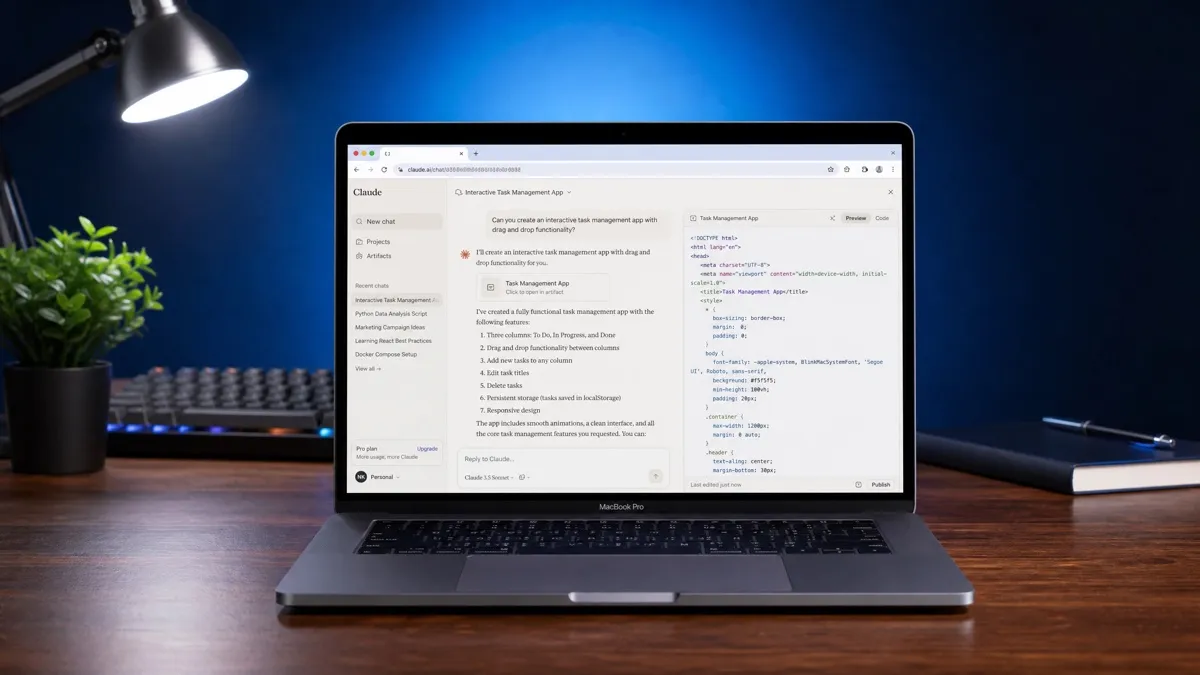
Claude Fable 5 Is Out — Here Is What Actually Changed
Rafael Zacheu
6 min read
Disclosure: This page contains affiliate links. As an Amazon Associate I earn from qualifying purchases. If you purchase through one of these links, I earn a commission at no extra cost to you. I only recommend products I genuinely believe in.
Stripe used Claude Fable 5 to complete a codebase-wide migration of 50 million lines of Ruby — a job their engineering team estimated would take months by hand. Fable 5 did it in a day.
Anthropic released Claude Fable 5 on June 9, 2026. Nobody is calling it "Claude 5," and that naming choice is doing a lot of work. Fable 5 sits in a new tier above the Opus line — what Anthropic is calling the Mythos class. The name comes from the Latin fabula, meaning "that which is told." A story-class model, capable enough to carry a complex task from beginning to end without losing the thread.
Before going into what's new, it's worth placing this in context. The Claude 4 line — Sonnet 4.6 and Opus 4.8 — has been strong since early 2026. Sonnet 4.6 at $3 per million tokens delivered 79.6% on SWE-Bench Verified, effectively matching the previous generation's flagship for most coding tasks at 40% less cost. Opus 4.8, released May 28, pushed further to 69.2% on the harder SWE-Bench Pro evaluation. These were good models.
Fable 5 is a different machine. On SWE-Bench Pro it scores 80.3% — more than 11 points ahead of Opus 4.8, and more than 21 points ahead of GPT-5.5. On Terminal-Bench 2.1, it posts 88%. On Humanity's Last Exam — a benchmark that genuinely stumps frontier models — it reaches 59%. The pattern across every benchmark is the same: the longer and harder the task, the larger Fable 5's lead.
That's the real story. Previous model upgrades tended to improve uniformly across task lengths. Fable 5's gains are concentrated at the top end of complexity — the multi-hour agentic sessions, the multi-file codebase migrations, the long-context scientific analysis. Comparing this to Claude 3.5 — the model most people were running two years ago — is almost a different conversation. Claude 3.5 was working at roughly a third of Fable 5's SWE-Bench Pro score, with no extended thinking, no agent teams, and no million-token context window.
Claude Fable 5 — By the Numbers
SWE-Bench Pro — coding benchmark by model
Claude Fable 5 — scores across all major benchmarks
| Model | Released | SWE-Bench Pro | Context | Price (input/output per 1M) |
|---|---|---|---|---|
| Claude Fable 5 | Jun 9, 2026 | 80.3% | 1M tokens | $10 / $50 |
| Claude Opus 4.8 | May 28, 2026 | 69.2% | 1M tokens | $5 / $25 |
| Claude Sonnet 4.6 | Feb 17, 2026 | ~79.6%* | 1M tokens | $3 / $15 |
| Claude 3.5 Sonnet | Oct 2024 | ~49%* | 200K tokens | $3 / $15 |
| GPT-5.5 (OpenAI) | 2026 | 58.6% | — | — |
*Sonnet 4.6 figure from SWE-Bench Verified (different harness). Claude 3.5 SWE-Bench Pro estimated from available data. Sources: Anthropic launch post, llm-stats.com, June 2026.
What If You're Paying Premium Prices for a Weaker Model?
Fable 5 ships with something no previous Claude model has had: safety classifiers that quietly reroute your query to Claude Opus 4.8 when it touches cybersecurity, biology, chemistry, or model distillation. Anthropic estimates this happens in less than 5% of sessions. They've also confirmed the classifiers are tuned conservatively — which means some harmless requests will trigger the fallback.
You are paying $10/$50 per million tokens for Fable 5. If you're building security tooling, a pharmacology app, or anything adjacent to the classified topics, your effective model could be Opus 4.8 — at Fable 5 pricing.
There's a version of this that's fine. A small fallback rate for genuinely dangerous queries is a reasonable trade. But the boundary between "dangerous cybersecurity query" and "a developer asking about their own infrastructure" is not always clean, and Anthropic has explicitly said the classifiers are conservative.
The second thing worth questioning is the ROI. Fable 5's biggest gains happen on tasks that run for hours or days — the kind of long-horizon agentic workflows that most individual users and many small teams rarely run. For typical use — a coding session, document analysis, content generation — the practical gap between Fable 5 and Opus 4.8 may be hard to feel. The benchmark gap is real. The everyday gap may be much smaller.
Fable 5 is free on Pro, Max, Team, and Enterprise plans until June 22. That window is an honest test period. Use it on your real workflows, not synthetic benchmarks, and make your own call on whether the upgrade is worth 2x the price of Opus 4.8 after June 22.
The Pioneer Tax Is Real — And Probably Temporary
Let's be direct about the $10/$50 per million token pricing. It is double what Opus 4.8 costs. That is not an accident and it is not purely justified by capability alone. There is a real first-mover premium baked into that number — and Anthropic's own history tells you what happens to it.
Extended thinking launched as an Opus-only feature. It's now in Sonnet. Agent Teams launched Opus-only. They're expanding. Every meaningful new capability in Claude's history has followed the same arc — new tier pricing, then Sonnet pricing, then Haiku pricing. Fable 5 will not be different.
The pricing makes sense in two specific cases. First, enterprise teams running the kinds of workloads Stripe used it for. If Fable 5 genuinely compresses two months of engineering work into one day, the per-token cost is rounding error on the labor budget. You could run the Stripe migration a hundred times at $10/$50 rates and still come out massively ahead.
Second, if you are building products where Fable 5's long-horizon accuracy is a competitive advantage — a code review agent, an autonomous research tool, anything where output quality directly translates to product value — the premium might pay for itself in product differentiation alone.
For everyone else? This is the first-month price of a new tier. The pattern is too consistent to ignore. Each generation, the new Sonnet catches the previous Opus — without exception. The question is not whether Fable 5's capabilities will reach Sonnet pricing. They will. The question is whether you need them in the next nine months badly enough to pay 2x for them now.
What People Who Tested It Said
"A major-version-bump-deserving step change forward."
Andrej Karpathy — AI researcher, co-founder of OpenAI
"Claude Fable 5 is the state of the art model on CursorBench. It's opened up a class of long-horizon problems that were previously out of reach."
Michael Truell — CEO, Cursor
"In a 50-million-line Ruby codebase, Fable 5 performed a codebase-wide migration in a day that would otherwise have taken a whole team over two months by hand."
Stripe — Early access testing, as reported by Anthropic launch post, June 9, 2026
It's also worth noting what Fable 5 did in testing outside of coding. It beat Pokémon FireRed using only raw game screenshots — no navigation aids, no game-state helper tools — something previous Claude models couldn't manage even with extra scaffolding. When given file-based memory in the deck-building game Slay the Spire, it improved three times more than Opus 4.8 from that memory access. These aren't benchmarks anyone optimizes for. They're signals about general capability under real uncertainty.
Short, Medium, and Long Outlook
Short — Now through June 22
Fable 5 is free on Pro, Max, Team, and Enterprise plans until June 22. Use that window to run it against the specific tasks you do — not synthetic tests. That's the only honest way to know if the 2x price is justified for your use case.
Medium — Q3 2026
Claude Mythos 5 — the unrestricted version of the same underlying model — is expected to expand beyond Project Glasswing. Anthropic has also promised safety classifier improvements to reduce false positive fallbacks. More capable models are coming before the year is out.
Long — 2026–2027
Every generation, the new Sonnet closes the gap with the prior Opus. If that pattern continues, a future Sonnet 5.x will deliver Fable 5-class performance at Sonnet pricing. The long play is still cost coming down while capability goes up.
Understand the Bigger Picture
If Fable 5 has you thinking about where AI is actually heading — and who gets to decide — these two books cover the ground the benchmarks don't.
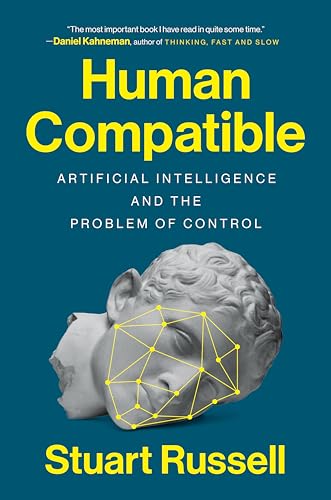
Stuart Russell
Human Compatible: Artificial Intelligence and the Problem of Control
Human Compatible — Stuart Russell on Amazon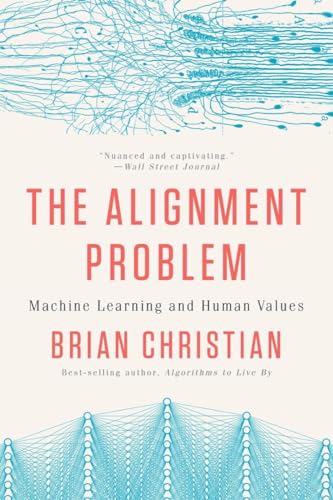
Brian Christian
The Alignment Problem: Machine Learning and Human Values
The Alignment Problem — Brian Christian on AmazonThe Bottom Line
Anthropic didn't call this Claude 5. They called it Fable — from the Latin fabula, meaning "that which is told." A story-class model. One that works long enough to tell its own story from start to finish. That framing is either poetic or accurate depending on whether your work actually requires that kind of sustained autonomy.
For most people, Opus 4.8 remains the right daily driver — strong enough for almost everything, at half the price. For teams running long-horizon agentic workloads — code migrations, multi-day research, complex financial analysis — Fable 5 opens a genuinely new category of what's possible. The benchmark gap is not marketing. It is real, and it is concentrated exactly where the most demanding tasks live.
The free window runs until June 22. That is more than enough time to find out where it lands for you.
For the hardware story running in parallel, see our NVIDIA RTX Spark breakdown and the Nemotron 3 Ultra analysis — the open-weights counterpart to this closed-model launch.
Tags: