
NVIDIA RTX Spark — The AI Superchip That Reinvents the Personal Computer
Rafael Zacheu
8 min read
It was the kind of keynote that makes you stop scrolling. Leather jacket, grand stage, an audience assembled from fifty countries. On the morning of June 1, 2026, Jensen Huang walked into the Taipei Music Center and delivered what may be the most sweeping technology keynote of the decade — two hours that functioned as a formal declaration: the company he built from a meeting at a Denny's restaurant has become the infrastructure on which the entire human economy will operate.
"Useful AI has arrived," Huang said early in the presentation. Not soon. Not eventually. Arrived. The message was unambiguous: the speculative years are behind us. Tokens are profitable. AI agents are replacing entire workflows. And NVIDIA built the machine this new world runs on.
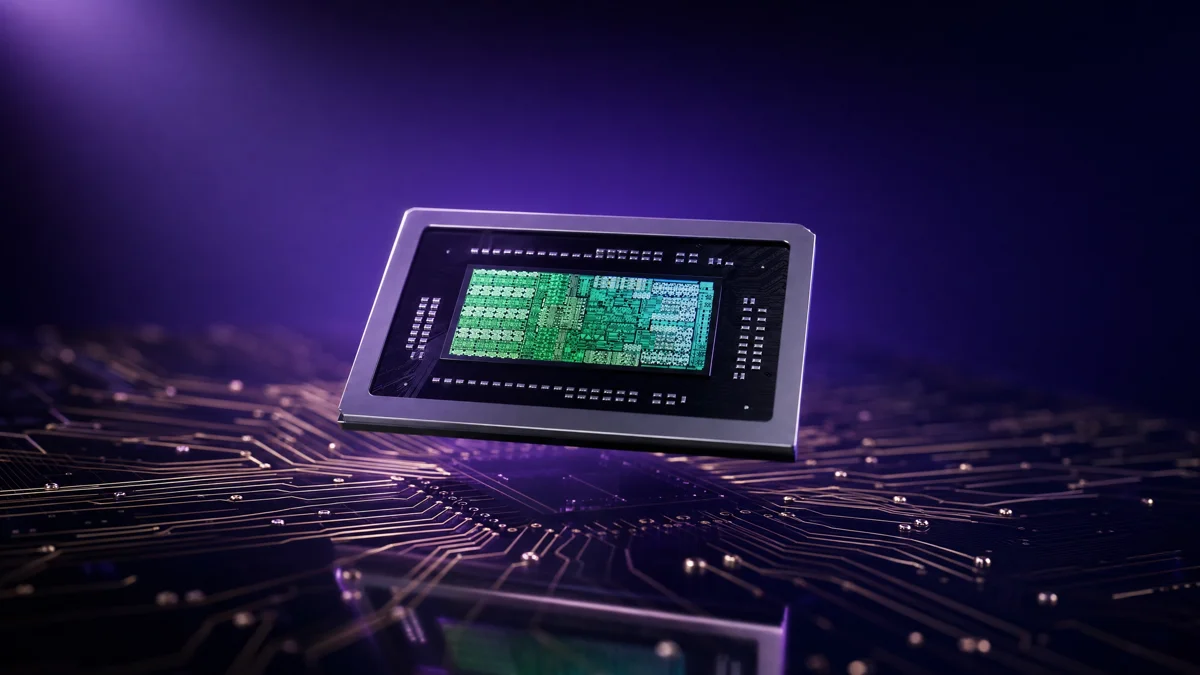
The centerpiece of that keynote was the RTX Spark Superchip — a Windows-on-ARM platform co-developed with Microsoft and MediaTek, manufactured on TSMC's 3nm process. Its stated purpose: run frontier AI models entirely on-device, without sending a single byte to a server the user has never seen.
Computex 2026 — Market reaction on announcement day
Single-session price change, June 1 2026
NVDA
NVIDIA
AMD
AMD
INTC
Intel
QCOM
Qualcomm
The market's reaction was immediate. NVIDIA climbed nearly 4%. Intel fell over 3%. AMD retreated. And Qualcomm — whose Snapdragon X chips had dominated the Windows-on-ARM market — collapsed 8.78% in a single session, its steepest single-day drop in months. In financial market terms, those numbers represent a seismic redistribution of confidence.
What RTX Spark Actually Is
RTX Spark is a System-on-Chip combining a 20-core NVIDIA Grace ARM CPU, a Blackwell GPU with 6,144 CUDA cores, and up to 128GB of unified LPDDR5X memory on a single package — manufactured at TSMC 3nm with 70 billion transistors. CPU and GPU connect through NVLink chip-to-chip interconnect at 600 GB/s, eliminating the memory bottleneck that has constrained every PC built in the last four decades.
| Specification | RTX Spark (Top SKU) |
|---|---|
| CPU | 20-core NVIDIA Grace (ARM) |
| GPU | Blackwell RTX — 6,144 CUDA cores |
| Tensor Cores | 5th Generation, FP4 precision |
| Memory | Up to 128GB unified LPDDR5X |
| Memory bandwidth | Up to 300 GB/s |
| AI performance | 1 Petaflop (FP4) |
| Chip interconnect | NVLink-C2C @ 600 GB/s |
| Process node | TSMC 3nm — 70 billion transistors |
| Max local model | ~120 billion parameters |
| Launch | H2 2026 |
The 128GB of unified memory — shared between CPU and GPU in a single high-speed pool — means a developer can load a 120-billion-parameter language model entirely on-device. Models at that scale normally require tens of thousands of dollars in cloud compute to run at production latency. The RTX Spark brings that capability to a thin notebook on your desk.
What makes this technically significant is the NVLink chip-to-chip running at 600 GB/s. Conventional PCs have separate CPU and GPU memory banks and must copy data between them — a bottleneck that has defined the limits of on-device AI for years. The RTX Spark eliminates that obstacle. CPU, GPU, and memory breathe together as a single system.
Vera Rubin and the Age of Agents
The RTX Spark was, in some ways, the consumer hook — the headline designed to anchor a much larger strategic arc. The real weight of the keynote was in what Huang said about data centers and about the nature of AI itself.
The Vera Rubin platform — the next-generation multi-rack system for agentic AI factories — is in full production. Named after the American astronomer who discovered direct evidence of dark matter, the platform consists of six co-designed chips: the Rubin GPU (336 billion transistors, dual-die, 3nm TSMC), NVIDIA's first standalone Vera CPU (ARM-based, 1.8× faster than x86 for agentic workloads), NVLink 6 Switch, ConnectX-9 SuperNIC, BlueField-4 DPU, and Spectrum-6 Ethernet Switch.
Early customers include Anthropic, OpenAI, and SpaceX. Microsoft Azure already has an engineering sample running. Mass shipments begin H2 2026. The supply chain for Blackwell and Rubin platforms involves over 150 Taiwanese partner companies, and accumulated demand visibility reportedly exceeds $1 trillion USD.
Alongside the hardware, Huang presented Nemotron 3 Ultra — an open-weights AI model with 550 billion parameters that leads the American open-weights rankings and delivers 300+ tokens per second at 30% lower cost than comparable models. He also revealed Cosmos 3, the world's first open physical-AI omnimodel for robotics (leading seven robotics benchmarks), and announced a partnership with Cadence to deploy AI super-agents in chip design — reducing verification cycles by a factor greater than 40.
The accumulated message was not subtle: NVIDIA is no longer a chip company. It is, as Huang declared, a full-stack AI platform company — one that now controls data center infrastructure, consumer PC chips, agent runtimes, foundation models, robotics simulation, and the supply chain that manufactures all of it.
Where This Technology Will Arrive
Hardware announcements can be seductive in the abstract. The more important question is simpler: what does this change, concretely, and for whom?
Healthcare: A medical notebook running a 100-billion-parameter model locally can analyze imaging, cross-reference drug interactions, and identify diagnostic patterns — without sending a single patient record to an external server. For hospitals operating under HIPAA, GDPR, or CCPA compliance requirements, on-device inference may be the only legally viable path to scaling AI in the sector.
Law and finance: Law firms and financial institutions deal with information so sensitive that cloud-based AI has been, for most of them, untenable until now. An RTX Spark workstation can perform contract review, document analysis, and financial modeling locally — unlocking AI productivity gains in exactly the sectors that have most resisted adoption.
Creative industries: NVIDIA claims the RTX Spark renders 3D projects exceeding 90GB, edits video at 12K, and generates AI clips in 4K — in notebook form factor. For architects, visual effects artists, and filmmakers who have always had to choose between mobility and professional-grade processing power, that is a real answer to decades of hardware limitations.
Education and research: Universities and independent researchers have always been priced out of frontier AI experimentation by cloud costs. A local machine capable of running 120-billion-parameter models with zero marginal cost per token — just a one-time hardware investment — can meaningfully redistribute who gets to do frontier AI research.
Small business: A single RTX Spark machine can replicate capabilities previously reserved for large corporate teams — autonomously drafting documents, managing calendars, summarizing email, writing code — with no variable cost and full data control. For small businesses without IT departments, that is a different proposition entirely.
Timeline: What to Expect and When
RTX Spark — Local AI model capacity by hardware tier
Near term — 2026/2027: First RTX Spark notebooks and desktops reach retail in H2, through Dell, HP, Lenovo, Microsoft Surface, ASUS, and MSI. Pricing will almost certainly remain premium — initial configurations are expected to start above $2,500 USD, limiting the audience to professional buyers. Windows on ARM compatibility issues with legacy software create friction. Regulatory scrutiny of NVIDIA's market position intensifies in the US and Europe.
Medium term — 2027/2030: The Vera Rubin Spark (next generation, LPDDR6 memory) launches in 2028, pushing RTX Spark pricing toward mainstream. The Windows agentic OS matures; AI agents become the standard interface for everyday tasks. Competitive response consolidates: Apple M-series, AMD, and Qualcomm all accelerate proprietary silicon programs specifically designed to reduce NVIDIA dependency. GR00T N2 and Cosmos 3 mature; autonomous robotics begin entering logistics, manufacturing, and retail at scale.
Long term — 2030+: The next hardware generation handles models that today require entire data centers. The "AI agent as primary computer user" paradigm normalizes. Professions reorganize around human oversight of autonomous systems. The gap between those with access to powerful local AI and those without becomes a defining socioeconomic divide of the era.
Two Angles on What NVIDIA Is Building
For: Privacy, Local Power, and the Promise of the Personal Agent
For years, the promise of AI assistance came with a hidden tax: your data. Every query sent to a cloud model, every document processed remotely, traveled through servers you cannot audit, belonging to companies whose interests do not always align with yours. The RTX Spark changes that contract at the hardware level.
With 128GB of unified memory and 1 petaflop of on-device AI compute, the chip can run 120-billion-parameter models locally. Your sensitive information never leaves your machine. NVIDIA's new OpenShell runtime adds a policy layer that lets users define exactly what their AI agents can access, enforce privacy rules before any data is transmitted externally, and audit agent actions in real time.
Running AI locally also eliminates latency, removes monthly cloud inference subscription costs, and brings powerful AI to locations with poor connectivity — rural hospitals, field researchers, small businesses outside broadband infrastructure reach. For the parts of the world that cloud AI simply never reached, local intelligence is a genuinely different proposition.
For professionals operating under HIPAA, GDPR, or CCPA, the combination of open model weights, local hardware, and a policy-enforced runtime is not a preference — it is compliance by architecture, not by contract clause.
Against: When One Company Controls the Entire Stack
Step back from the petaflops for a moment and look at the shape of what Jensen Huang announced. A single company now designs the data center chips that power cloud AI, the CPU competing with Intel and AMD, the consumer PC chip, the open-weights foundation models, the robotics simulation platform, the agent runtime, and the supply chain architecture — with 150 partner companies in Taiwan dependent on NVIDIA's continued success.
This is not diversification. It is a moat so wide it begins to look like a wall. Technology history offers a consistent lesson: every major tech company that reached this level of vertical integration eventually used that integration in ways that harmed competitors and restricted consumer choice. The CUDA ecosystem already carries 18 years of advantage that no competitor can meaningfully replicate.
The legal signals are already flashing. China's State Administration for Market Regulation accused NVIDIA of violating antitrust law. Intel publicly warned about "compatibility and DRM issues" with Windows on ARM. Meanwhile, Amazon, Meta, Alphabet, and Microsoft are all accelerating proprietary silicon development precisely because dependency on a single vendor at this scale is a strategic vulnerability none of them can ignore indefinitely.
There is also the question of who gets left behind. RTX Spark devices will arrive initially from premium manufacturers at premium prices. And the gaming community — NVIDIA's original loyal base — already feels abandoned: 2026 may be the first year in three decades without a new consumer GeForce GPU generation, as manufacturing capacity shifts to AI chips.
The Bottom Line
What is not in dispute: June 1, 2026, marked a genuine inflection point in personal computing history. The RTX Spark is not hype without substance — it has a confirmed supply chain, confirmed OEM partners, and confirmed launch timelines. The Vera Rubin platform is not a roadmap slide: it is in production, with first racks already running in Microsoft Azure. The technology exists. The architecture is sound.
Whether it serves humanity broadly, or concentrates power narrowly, is the most important question in technology today. And the answer will not come from Taipei.
Frequently Asked Questions
What is NVIDIA RTX Spark? The RTX Spark is a superchip developed by NVIDIA in partnership with Microsoft and MediaTek, manufactured on TSMC's 3nm process. It combines a 20-core ARM CPU with a Blackwell GPU featuring 6,144 CUDA cores, sharing up to 128GB of unified memory — delivering 1 petaflop of AI performance. It is designed to run frontier-capable AI agents entirely on-device, without cloud dependency.
When does RTX Spark launch? H2 2026, through Dell, HP, Lenovo, ASUS, MSI, and Microsoft Surface. Starting prices are expected above $2,500 USD for base configurations, with top-spec builds exceeding $4,000.
Does RTX Spark run games? Yes. The Blackwell GPU is equivalent to a desktop RTX 5070 and supports ray tracing, DLSS, and G-SYNC. NVIDIA positions the chip primarily for AI workloads, but gaming performance is real and competitive for a laptop chip.
What AI models run on RTX Spark? Any model in the CUDA ecosystem. The RTX Spark is the reference hardware for the Nemotron 3 Super (120B parameters) and supports the full open-weights ecosystem via Ollama, llama.cpp, vLLM, and SGLang. Nemotron 3 Ultra (550B) runs via NVIDIA NIM cloud access or on server-class configurations.
Tags: